Authored Systems Doctrine — Governed AI & Trusted Visibility
AUTHORITY & EVIDENCE
Research for high-trust organizations: govern consequential AI at the point of action, preserve evidence of what occurred, and make public information clear enough to be accurately understood.
Control
AUTHORITY
PERIMETERS
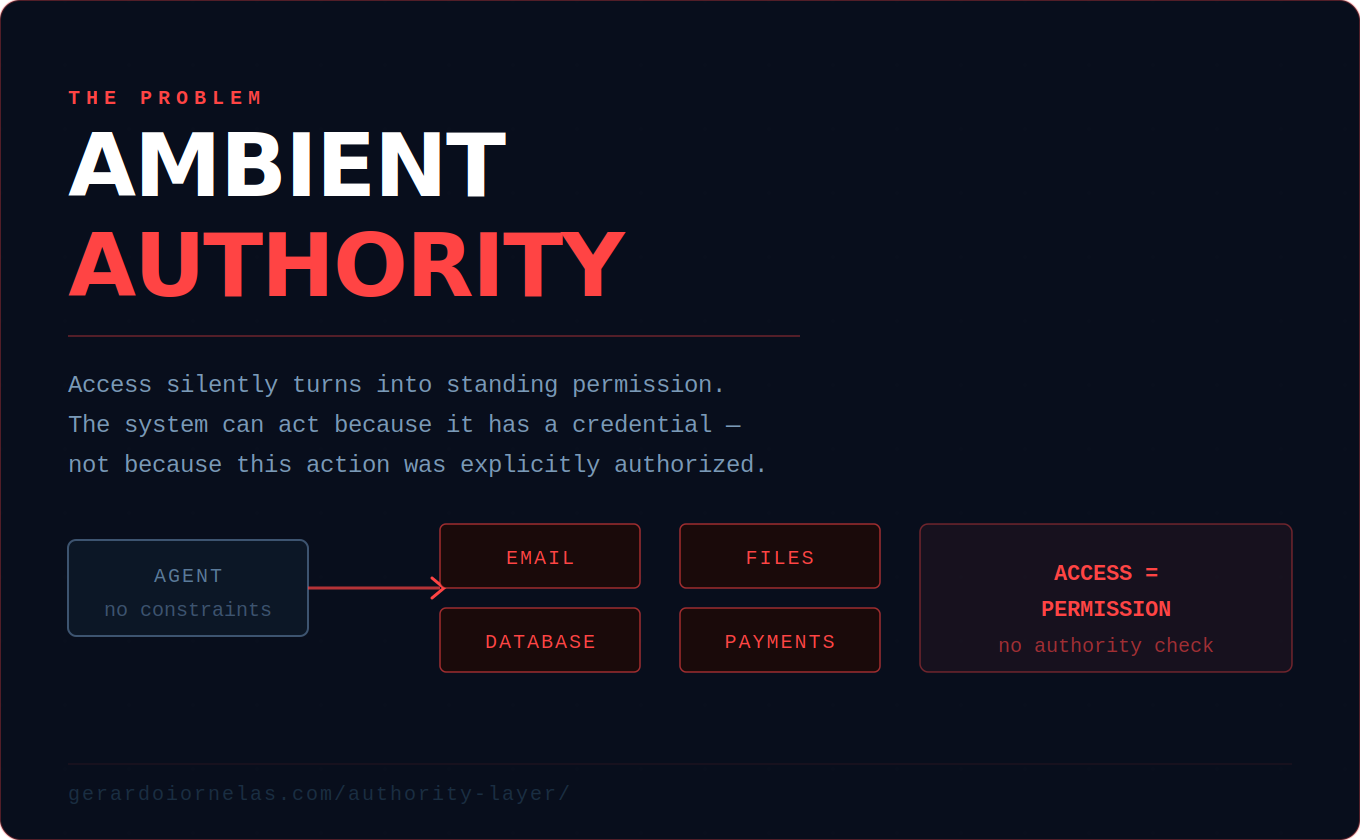
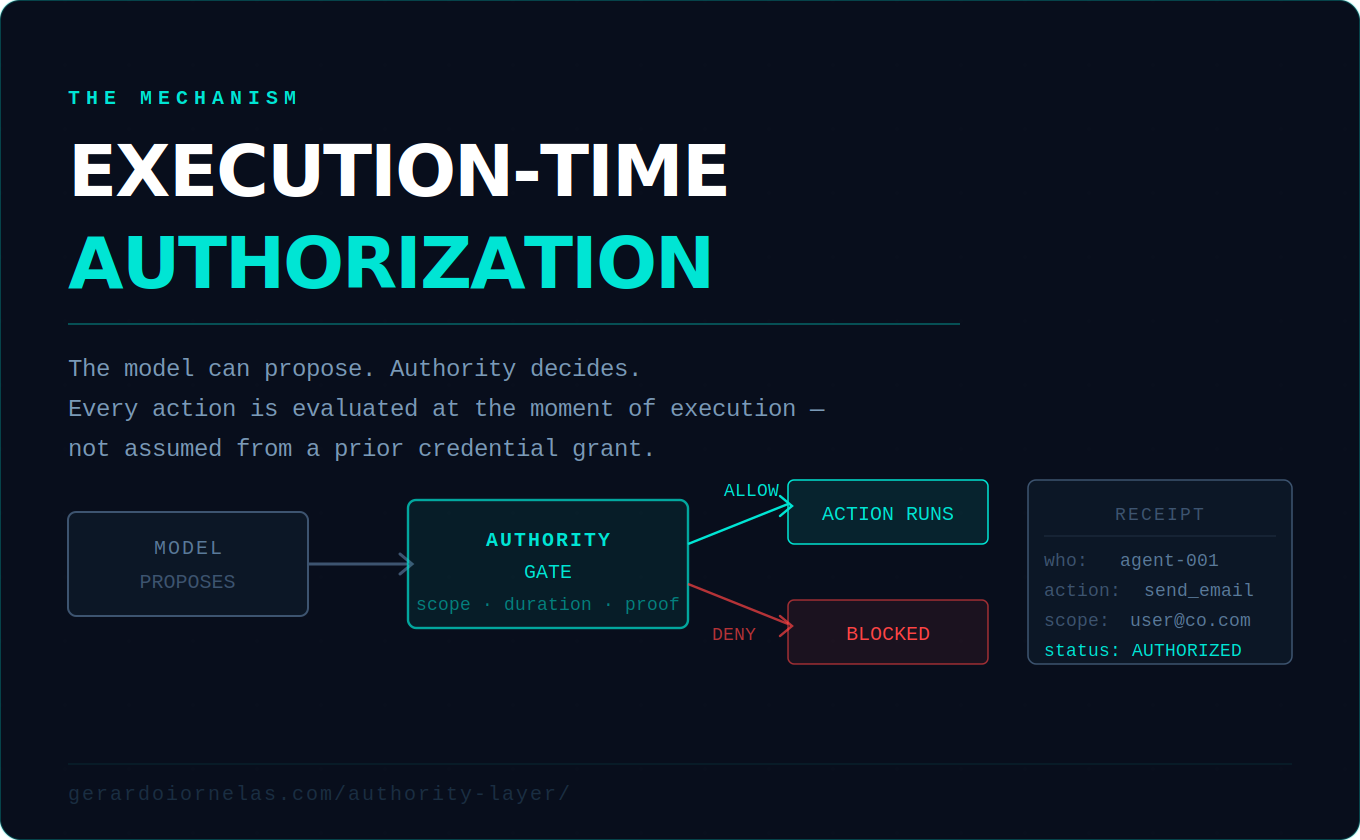
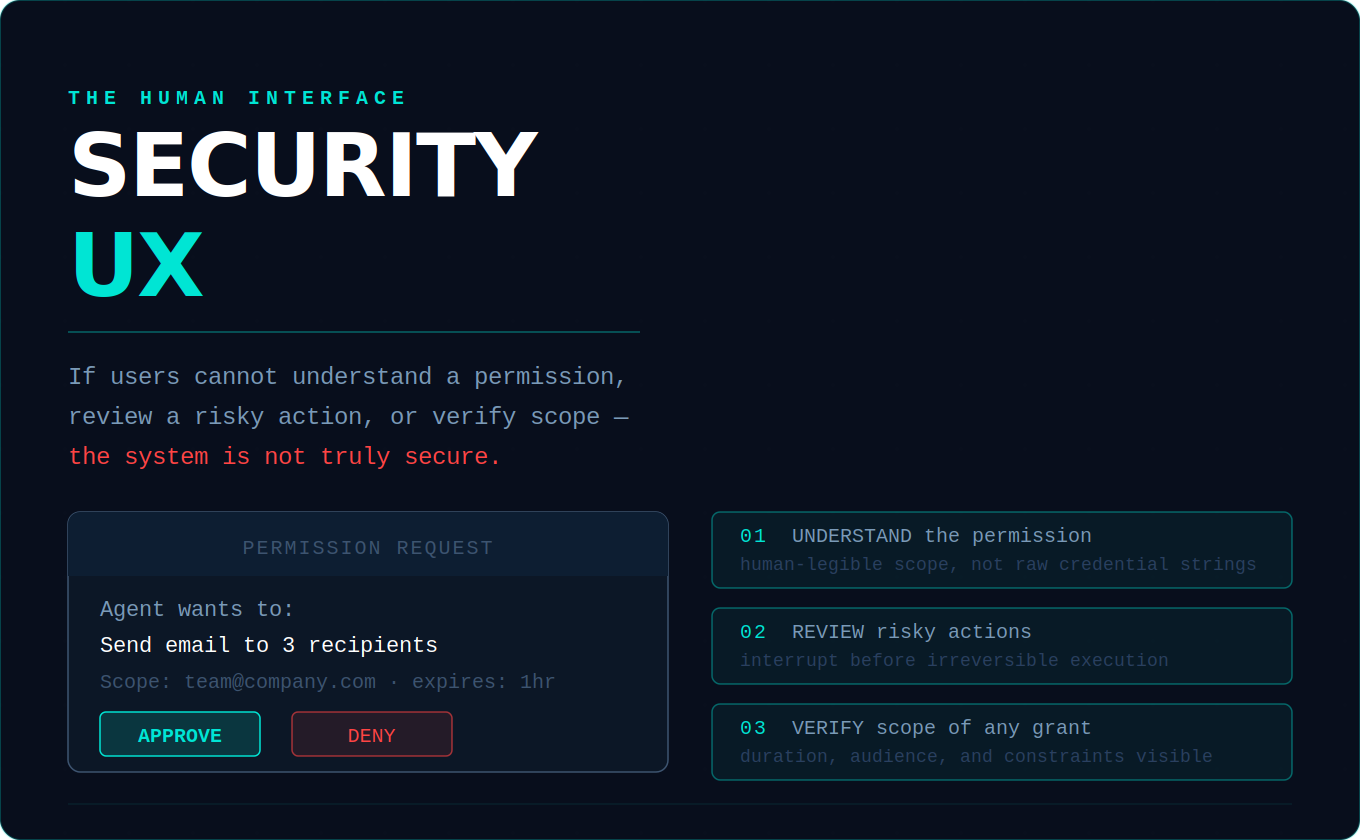
Consequential mortgage AI needs an explicit answer to who or what may act, in which workflow, under which limits, and with whose oversight. Policy has to become an operating control at the moment an action could change state.
Evidence
CONTROL +
PROOF
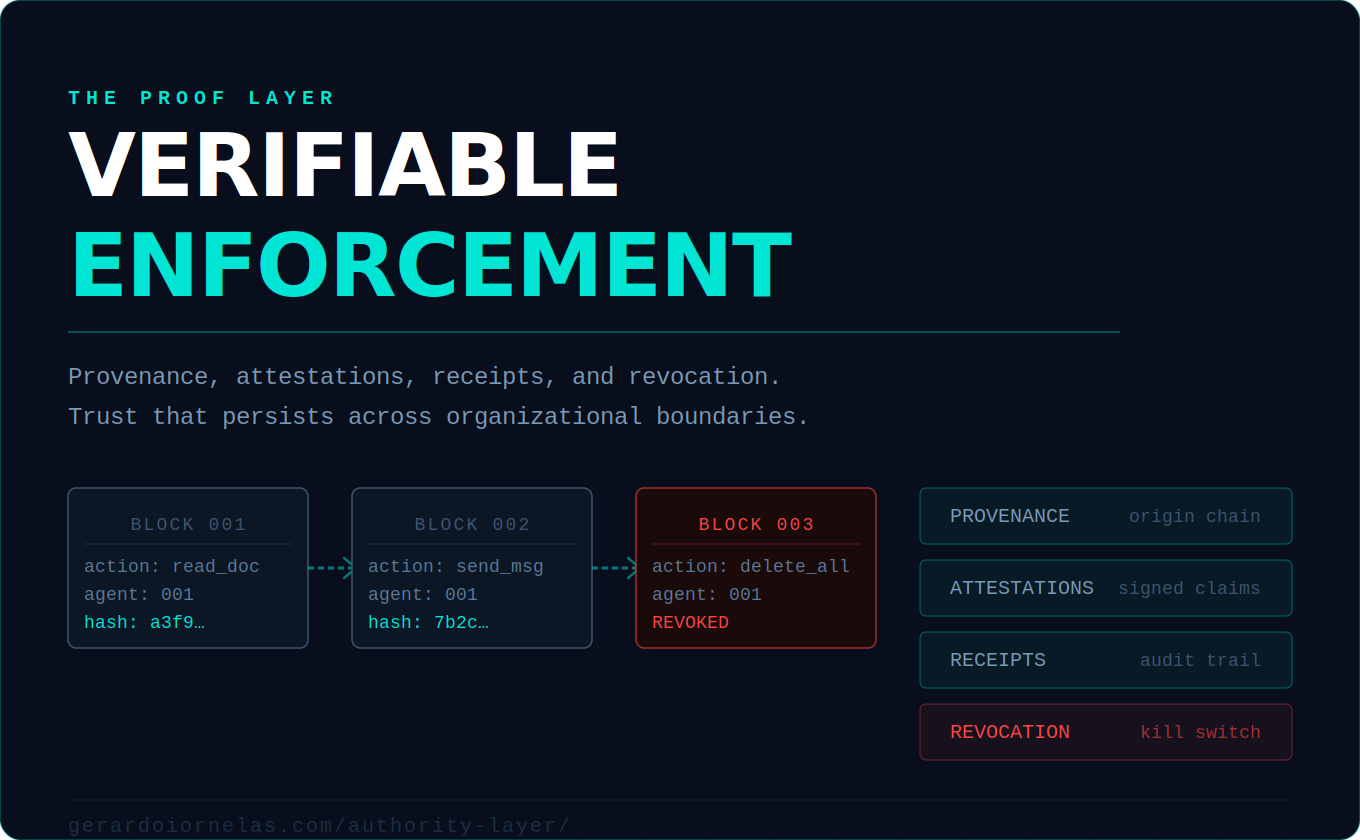
Governance cannot stop at policy. A defensible program retains the actor, requested action, authority decision, result, and review record needed to understand what occurred. MISMO FRAME provides a practical reference for the policy, inventory, risk, controls, oversight, and documentation concerns this work addresses.
Discoverability
TRUSTED
VISIBILITY
Being indexed is not the same as being understood. Businesses need accurate, credible information across search, AI answers, content, and conversion surfaces so people and answer engines can find, interpret, and trust them.
Doctrine
AUTHORED
SYSTEMS
The Agent Permission Protocol and related research explain the shared principle: authority should be explicit in execution, and evidence should be trustworthy wherever it informs a consequential decision—inside an operating workflow or in the public information around a business.
RESEARCH PATH
UI-GATES methodology— a supporting research methodology for governed agentic work
© Gerardo I. Ornelas
Systems architect, founder, and advisor for governed AI and trusted visibility.